
EN
Follow us on
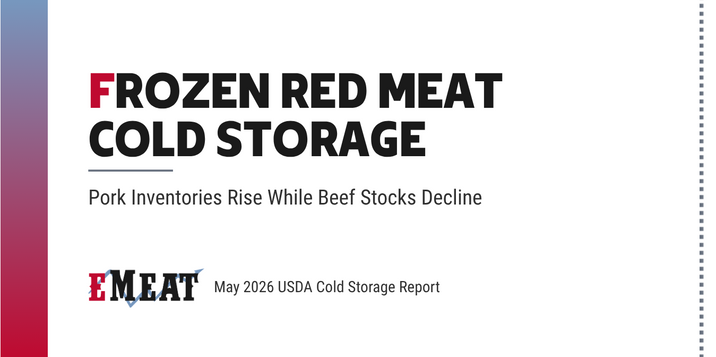
The USDA Cold Storage Report for May 2026 highlights a growing divergence between pork cold storage inventories and beef cold storage inventories in the United States. While pork stocks have continued to build for a fourth consecutive month, beef inventories have steadily declined since February, reflecting distinct supply dynamics across the protein sector.
Cold storage inventories are closely monitored by meat industry professionals because they provide insight into supply availability, market balance, and potential price direction. Rising inventories often indicate abundant supply, while declining inventories can signal tighter market conditions.
Pork cold storage inventories increased from 403,503 KLbs in February 2026 to 451,917 KLbs in May 2026, representing a 12.0% increase over the four-month period.
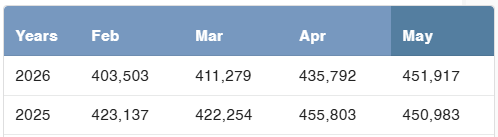
The steady increase in frozen pork inventories suggests that production and available supply have outpaced the combined effects of domestic consumption and export demand. As more product enters storage, overall inventory levels continue to expand.
Growing pork inventories can influence market expectations, particularly if supplies continue to accumulate during the second half of the year. Market participants will be monitoring whether demand growth is sufficient to absorb the additional volume entering the supply chain.
Several factors can contribute to rising pork cold storage inventories, including:
While inventory growth does not automatically translate into lower prices, expanding supplies generally increase the amount of product available to the market.
In contrast to pork, beef cold storage inventories have moved lower throughout the spring of 2026. Inventories declined from 413,341 KLbs in February 2026 to 403,474 KLbs in May 2026, representing a 2.4% decrease.
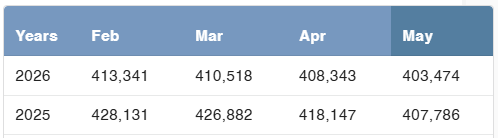
Although the decline has been gradual, the trend points toward a tighter supply environment compared to pork.
Lower frozen beef inventories are consistent with broader market conditions that have been characterized by constrained cattle supplies and reduced inventory accumulation. As stocks continue to decline, available supplies become relatively tighter, which may provide support for beef market fundamentals.
Declining beef inventories can indicate:
These factors make cold storage trends an important metric for evaluating future market conditions.
The latest USDA cold storage data shows a clear divergence between the pork and beef markets.
This contrast highlights how supply fundamentals can differ significantly across protein categories, even within the same reporting period.
The USDA Cold Storage Report is one of the industry's most important indicators for assessing available supply and monitoring inventory trends.
While cold storage data is only one component of market analysis, inventory trends often provide valuable context for understanding future movements in pork and beef markets.
Understanding inventory movements is essential for evaluating supply conditions and identifying market opportunities. Through EMEAT's analytics platform, industry professionals can monitor USDA cold storage inventories, meat production, imports, exports, wholesale prices, forecasts, and market trends across the North American protein sector.
Stay informed with the latest meat market data, analytics, and insights from EMEAT.
Beef
Pork
Questions about this Article?:
The EMEAT Team
Sales, Purchasing, RiskManagement
We simplify data analysis and interpretation with user-friendly, affordable, and customizable tools. Our market data, analytics, and insights empower everyone in the North American meat industry, from ranchers, feedlot operators, and meat packers to retailers and food service companies.
Sign Up and enjoy full access to EMEAT
Complete market data, advanced analytics, forecasting and risk management tools at your fingertips for 14 days. Don't miss the opportunity to explore EMEAT's full potential!
no payment information required


Copyright © 2021-2026. All rights reserved
This website stores cookies on your computer. These cookies are used to collect information about how you interact with our website and allow us to remember you. We use this information in order to improve and customize your browsing experience and for analytics and metrics about our visitors on this website. To find out more about the cookies we use, see ourPrivacy Policy.