
EN
Follow us on
The U.S. beef market is influenced by more than domestic production and cattle prices. Imported beef also plays an important role in the market, particularly for products used across processing, manufacturing and other segments of the beef supply chain.
Imported beef prices can vary depending on several factors, including product specification, lean percentage, country of origin, destination region and sales period.
For buyers, sellers, analysts and other market participants, monitoring these variables can provide a clearer view of the competitive landscape and help identify changes in imported beef values.
This is where detailed market data becomes valuable.
EMEAT's Import Beef Trade data provides a detailed view of imported beef prices in the U.S. market.
Instead of looking at imported beef as a single market value, users can explore prices according to different dimensions, including:
This level of detail makes it easier to identify differences between products and origins and monitor where prices are moving.
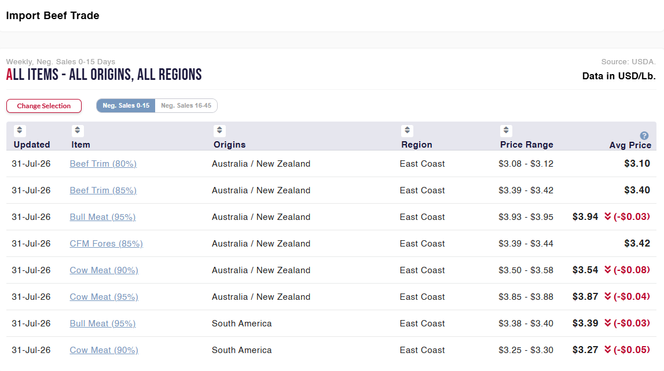
Imported beef prices can differ significantly depending on the product and its specifications. The EMEAT Import Beef Trade section allows users to monitor individual categories such as:
Products can also be differentiated by lean percentage, such as 80%, 85%, 90% and 95%.
This makes it possible to move beyond a general imported beef price and analyze the specific products that matter to a company's procurement or market strategy.
Origin is another important dimension when analyzing imported beef prices.
EMEAT allows users to identify prices from different sourcing regions, including Australia / New Zealand and South America, providing greater visibility into how imported products are priced across origins.
Comparing origins can help market participants identify pricing differences and monitor changes in the competitive landscape.
Imported beef prices can also vary depending on the U.S. region where the product is traded. The EMEAT dataset includes regional information, allowing users to identify where products are being offered and compare pricing conditions across the market.
This additional layer of information can provide important context when evaluating supplier offers, procurement opportunities or broader market movements.
Stay informed on U.S. imported beef prices with detailed market data covering products, origins, regions, price ranges and market movements.
Explore EMEAT's Beef Market Analytics and gain a clearer view of the market.
Beef
Questions about this Article?:

The EMEAT Team
Sales, Purchasing, RiskManagement
We simplify data analysis and interpretation with user-friendly, affordable, and customizable tools. Our market data, analytics, and insights empower everyone in the North American meat industry, from ranchers, feedlot operators, and meat packers to retailers and food service companies.
Sign Up and enjoy full access to EMEAT
Complete market data, advanced analytics, forecasting and risk management tools at your fingertips for 14 days. Don't miss the opportunity to explore EMEAT's full potential!
no payment information required


Copyright © 2021-2026. All rights reserved
This website stores cookies on your computer. These cookies are used to collect information about how you interact with our website and allow us to remember you. We use this information in order to improve and customize your browsing experience and for analytics and metrics about our visitors on this website. To find out more about the cookies we use, see ourPrivacy Policy.