
EN
Follow us on
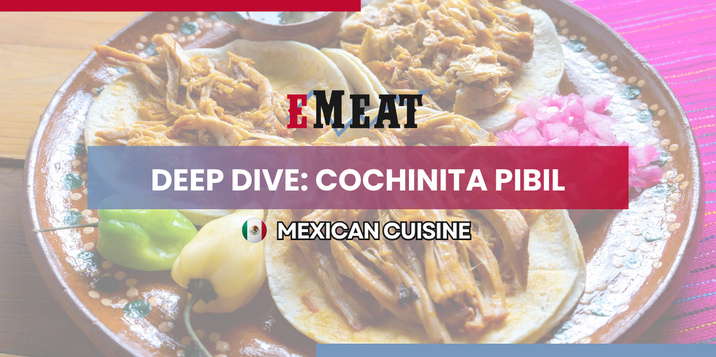
Cochinita Pibil represents a masterful fusion of Mayan subterranean cooking techniques and Spanish livestock. In the modern market, it has evolved from a ritualistic village feast into a high-demand protein for both artisanal restaurants and CPG (Consumer Packaged Goods) manufacturers.
The name is a linguistic hybrid: Cochinita (Spanish for "baby pig") and Pibil (Mayan for "to bury" or "cooked in a pib").
The Pre-Hispanic Roots: Before the 16th century, the Maya utilized the pib—an earth oven lined with hot stones—to cook game like venison and wild boar.
The Colonial Pivot: When the Spanish introduced pork to the Yucatán Peninsula, the indigenous population applied their pit-roasting method to the new, fattier protein.
Cultural Context: Traditionally, the dish is the centerpiece of Hanal Pixán (food for the souls), reflecting its status as a communal, celebratory meal rather than daily street food.
Unlike the crispy texture of Michoacán-style Carnitas, Cochinita Pibil is defined by its silky, shredded consistency and heavy saturation in a bright, acidic marinade.
Service Style: Most commonly served as Tacos, Tortas (sandwiches), or Panuchos (fried tortillas stuffed with black beans).
The Critical Garnish: Because of the meat's high fat and spice content, it is almost exclusively paired with pickled red onions (macerated in sour orange) and Habanero salsa. This provides the necessary acidity to "cut" through the richness of the pork.
While still trailing Al Pastor in general awareness, Cochinita Pibil is a rapidly growing "specialty" pork category in the U.S.
Chata: The dominant player in the shelf-stable Mexican meat category, providing 8.8oz retort-pouch Cochinita in major retailers like Walmart and H-E-B.
Frontera Foods: Offers "Yucatán" simmer sauces that allow consumers to replicate the flavor profile using standard slow cookers.
Del Real Foods: A leader in the refrigerated heat-and-eat sector, often featuring regional pork specialties in wholesale clubs (Costco/Sam's Club).
Polished Fast-Casual: Brands like Chronic Tacos and Pappasito’s Cantina have integrated it into their permanent menus to differentiate themselves from standard "Tex-Mex" offerings.
The transformation of tough pork shoulder into tender Cochinita involves complex biochemical reactions.
The traditional marinade uses Seville (Bitter) Orange juice, maintaining a pH between 2.5 and 3.5.
Isoelectric Point: When the pH of the meat drops below its isoelectric point (approx. pH 5.1), the myofibrillar proteins gain a net positive charge. This causes the fibers to repel each other and "swell," increasing the meat's Water Holding Capacity (WHC) and resulting in a succulent mouthfeel.
Achiote (Annatto) Chemistry: The carotenoids in achiote act as natural antioxidants, inhibiting Lipid Oxidation, which prevents the "warmed-over flavor" often associated with reheated pork.
The pork shoulder is rich in Type I collagen. To achieve the "shreddable" state, the internal temperature must reach 195°F – 205°F (90°C – 96°C).
The Vapor Barrier: Wrapping the meat in banana leaves creates a sealed micro-environment. This prevents evaporative cooling (the "stall") and ensures a high-humidity braise, which is essential for converting tough collagen into silky gelatin.
Method: A pit is dug and lined with stones heated by a hardwood fire (usually Akits or Chukum wood).
Ingredients: Whole suckling pigs or large primal cuts, bitter orange, achiote paste, and local spices (allspice, cloves).
Result: A complex flavor profile featuring smokiness from the earth and tannic notes from the scorched banana leaves.
To scale Cochinita Pibil for mass consumption, manufacturers move away from the pit while attempting to replicate its chemistry.
Retort Processing: Most shelf-stable versions are cooked inside the final pouch at high pressure. While efficient for food safety, the high heat (over 121°C) can lead to "over-processing," where meat fibers lose their distinct "bite."
Industrial Sous-Vide: Used by high-end foodservice suppliers. Meat is vacuum-sealed and cooked at lower temperatures (165°F / 74°C) for up to 48 hours. This preserves the structural integrity of the muscle fibers better than retort.
Additive Integration: Industrial recipes often include Sodium Tripolyphosphate to maintain moisture and Liquid Smoke to replace the authentic wood-fired flavor lost in a stainless-steel factory environment.
| METRIC | ARTISANAL | INDUSTRIAL |
| Cooking Vessel | Earth Pit (Pib) | Retort / Steam Oven |
| Primary Acid | Fresh Bitter Orange | Citric Acid / Vinegar Concentrate |
| Moisture Retention | Banana Leaf Wrap | Vacuum Seal + Phosphates |
| Texture | Tender but Fibrous | Soft / Highly Disintegrated |
Next Step: Would you like to proceed with Al Pastor, focusing on the enzymatic tenderization of pork via pineapple-derived bromelain?
Beef
Fabrication
Questions about this Article?:

The EMEAT Team
Sales, Purchasing, RiskManagement
We simplify data analysis and interpretation with user-friendly, affordable, and customizable tools. Our market data, analytics, and insights empower everyone in the North American meat industry, from ranchers, feedlot operators, and meat packers to retailers and food service companies.
Sign Up and enjoy full access to EMEAT
Complete market data, advanced analytics, forecasting and risk management tools at your fingertips for 14 days. Don't miss the opportunity to explore EMEAT's full potential!
no payment information required


Copyright © 2021-2026. All rights reserved
This website stores cookies on your computer. These cookies are used to collect information about how you interact with our website and allow us to remember you. We use this information in order to improve and customize your browsing experience and for analytics and metrics about our visitors on this website. To find out more about the cookies we use, see ourPrivacy Policy.