
Follow us on
Political repositioning on trade between the U.S. and our trading partners is occurring daily. It is too early, and too uncertain, to predict how potential tariffs, and their retaliatory tariffs, could play out.
Tariffs won’t stop trade. But retaliatory tariffs would reduce U.S. export volume. The U.S. domestic market would need to consume more pork.
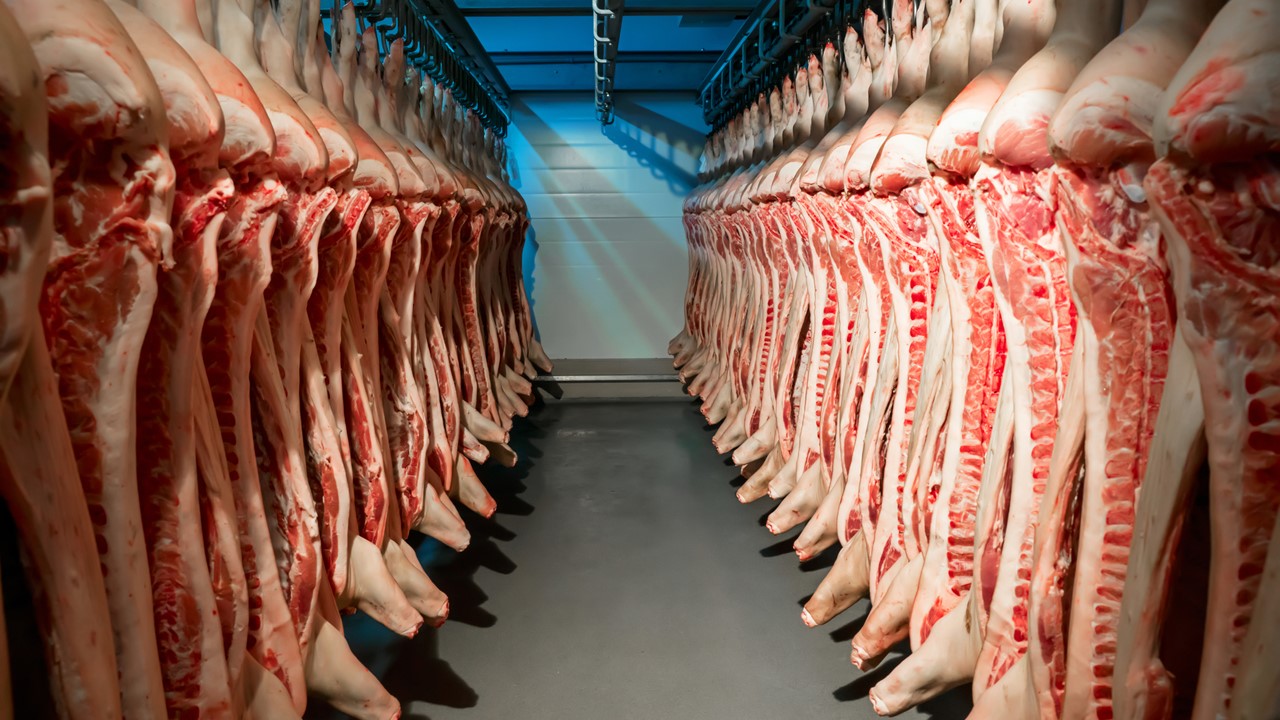
Cold storage capacity can serve as a cushion against short-term imbalances in supply and demand. Currently low pork cold storage levels may somewhat help the pork industry withstand a short-term trade upheaval. That could buy time to plan further adjustments to the continuously evolving world trade environment.
The 400,398,000 pounds of total pork in cold storage on Dec. 31, 2024 were the smallest since December 2021 (Figure 1) and before that December 1997. December pork in cold storage inventories peaked in 2019 at 580,464,000 pounds. The average monthly quantity of pork in cold storage in 2024 was only 2.1% of total domestic pork disappearance for the year.
The U.S. pork industry’s reliance on exports make it vulnerable to any extended trade disruption. USDA’s World Agriculture Outlook Board, in their estimates released on Jan. 10, 2025, forecasted 2025 U.S. pork exports at 7.325 billion pounds, almost 6.5 times projected pork imports of 1.140 billion pounds. From another angle, those 7.325 billion pounds of pork exports are almost 26% of the 28.525 billion pounds of U.S. pork production forecasted for 2025.
Questions about this Article?:
Copyright © 2021-2025. All rights reserved
This website stores cookies on your computer. These cookies are used to collect information about how you interact with our website and allow us to remember you. We use this information in order to improve and customize your browsing experience and for analytics and metrics about our visitors on this website. To find out more about the cookies we use, see ourPrivacy Policy.