
EN
Follow us on
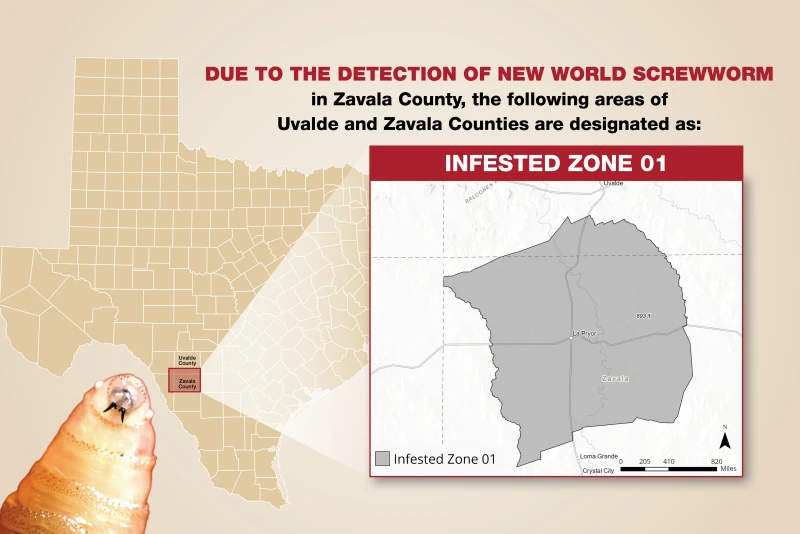
After confirming an infestation in a 3-week-old beef calf, USDA and Texas Animal Health Commission (TAHC) warn animal movement — not fly travel — spreads the pest, and outline inspection, treatment and quarantine steps for cattle producers.
The first Texas case of New World screwworm (NWS) since 1966 has been confirmed on a cow–calf operation in Zavala County near La Pryor, triggering an aggressive joint response from USDA and TAHC.
Officials stress two key messages: This is not a food safety crisis, and the pest spreads with animals, not by flies traveling long distances on their own. Those points are driving both the regulatory response and what they’re asking producers to do on the ground.
“This pest does not cause any sort of a food safety issue. It is not a disease, but simply an insect that feeds on living tissues,” U.S. Secretary of Agriculture Brooke Rollins stresses. “Animals treated early enough will recover and are safe to enter the food supply system again.”
Dr. Bud Dinges, Texas Animal Health Commission (TAHC) executive director, also confirms: “New World screwworms do not infest meat, fruits, vegetables or other food sources.”
Officials emphasize human-driven movement of animals is the primary risk factor.
“Typically, [it] moves great distances because humans move animals, not because the fly flies to new areas,” Rollins explains.
Questions about this Article?:
Copyright © 2021-2026. All rights reserved
This website stores cookies on your computer. These cookies are used to collect information about how you interact with our website and allow us to remember you. We use this information in order to improve and customize your browsing experience and for analytics and metrics about our visitors on this website. To find out more about the cookies we use, see ourPrivacy Policy.