
EN
Follow us on
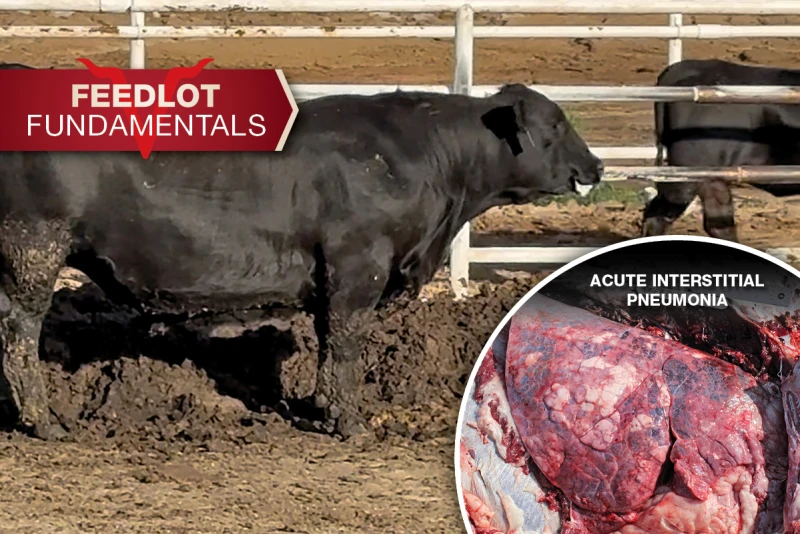
Acute (or atypical) interstitial pneumonia — often shortened to AIP — is one of the most frustrating respiratory problems feedlots face. It doesn’t hit every lot, every pen or even very many head. But when it does show up, it usually strikes late in the feeding period — often after 100 days on feed — in high-performing cattle and can carry a case fatality rate of 70% to 100%.
“You can have a heifer that looks fine in the morning and is in severe respiratory distress by the hot afternoon,” says Dr. Paige Schmidt. “By the time we see it in the feeding period, a lot of our economic resources on that animal are already invested.”
Schmidt is a mobile- practice veterinarian in Turon, Kan., where she is building a consulting career in the Kansas/Nebraska region. She has been part of research efforts to better understand AIP in feedlot cattle. She says the industry is still searching for clear answers — but there are patterns and practical lessons producers can use today.
Here are seven facts beef producers should know about AIP:
Fact 1: AIP Comes On Fast and Looks Like a Severe Respiratory Wreck
AIP is a respiratory disease with an acute onset of clinical signs. Cattle can appear normal in the morning and be in serious trouble by evening.
“AIP is a respiratory disease that has an onset just like its name,” Schmidt describes. “It comes on very acutely. The animal can be normal one morning, and then later that evening can show severe respiratory signs, such as typical respiratory distress, open-mouth breathing. They can have froth from their mouth — they’ll extend their neck out trying to better be able to breathe.”
Questions about this Article?:
Copyright © 2021-2026. All rights reserved
This website stores cookies on your computer. These cookies are used to collect information about how you interact with our website and allow us to remember you. We use this information in order to improve and customize your browsing experience and for analytics and metrics about our visitors on this website. To find out more about the cookies we use, see ourPrivacy Policy.