
EN
Follow us on
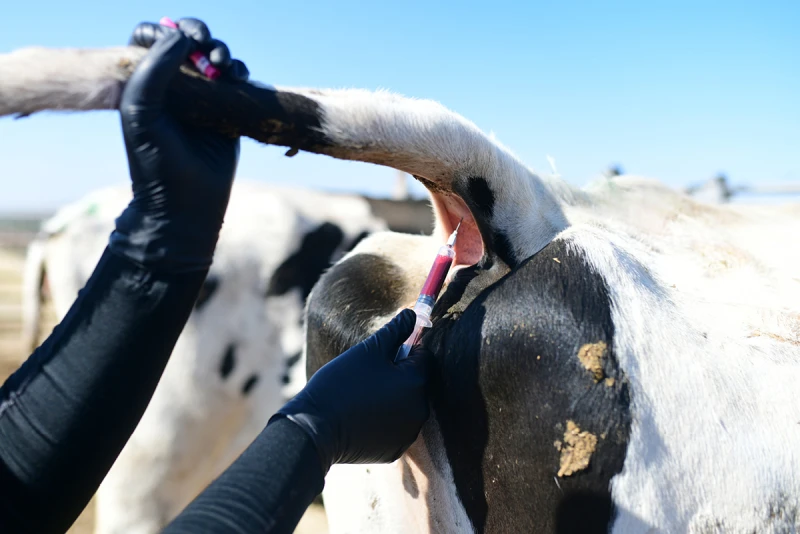
Johne’s disease has a diagnostic problem that has persisted for decades: infected cattle can harbor Mycobacterium avium subspecies paratuberculosis (MAP) for years while showing few or no clinical signs, and conventional tests may miss animals during that period. Now, researchers at the Australian Centre for Disease Preparedness have developed a blood-based diagnostic that uses a combination of host microRNAs and machine learning to identify cattle infected with MAP.
The study identified a three-microRNA signature that demonstrated an estimated diagnostic sensitivity of 92.8% and specificity of 94.8%. By comparison, the combined reference tests used in the study had estimated sensitivity of 75.5% and specificity of 96.0%.
Looking for the Cow’s Response to MAP
Current ante-mortem Johne’s disease diagnostics primarily rely on detecting MAP shedding through fecal culture or PCR, or detecting an antibody response through ELISA. Those signals can be limited during early infection, creating opportunities for infected animals to test negative.
Instead of looking directly for the pathogen, this research looked for changes in the cow’s circulating microRNAs, small RNA molecules involved in regulating gene expression.
Serum samples from MAP-infected and MAP-uninfected cattle in Australia and New Zealand were analyzed using RNA sequencing. The researchers identified 171 differentially expressed miRNAs, providing a large pool of potential biomarkers.
Machine-learning algorithms were then used to identify combinations of miRNAs that best distinguished infected from uninfected cattle.
Questions about this Article?:
Copyright © 2021-2026. All rights reserved
This website stores cookies on your computer. These cookies are used to collect information about how you interact with our website and allow us to remember you. We use this information in order to improve and customize your browsing experience and for analytics and metrics about our visitors on this website. To find out more about the cookies we use, see ourPrivacy Policy.