
Follow us on
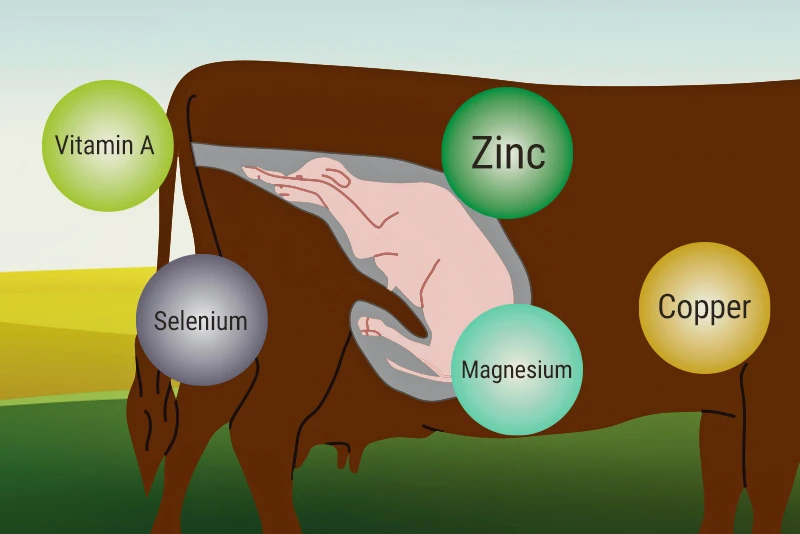
Stillbirths and weak newborn calves are among the most frustrating outcomes in both beef and dairy systems. Calving difficulty, infectious disease and congenital defects are often investigated first, yet many cases end with no clear explanation. Even when calving appears normal, losses still occur leaving veterinarians and producers searching for answers after the fact.
Dr. Bob Van Saun, professor and Extension veterinarian at Penn State University, spoke on the importance of maternal nutrition and the placental transfer of vitamins and minerals on a recent episode of AABP’s “Have You Herd?” podcast.
What often goes unnoticed is the gestational environment that shaped the fetus long before calving began. Nutritional decisions made months earlier, particularly around vitamins and trace minerals, can quietly determine whether a calf is born resilient, compromised or nonviable. Rather than being isolated calving failures, some stillbirths might represent the final outcome of inadequate fetal preparation.
“If we don’t do what we need to do nutritionally for that pregnant animal, we could have very long-term effects not only on the reproductive success of the female, but also on the offspring,” Van Saun says.
Newborn Calves Enter the World Nutritionally Limited
Newborn calves, whether beef or dairy, arrive with a biological disadvantage: milk alone cannot meet their trace mineral and vitamin needs.
“We often tout milk as nature’s perfect food, and it certainly plays a very important role in the macro minerals and in energy and protein, but one of the things that’s been well known is milk does not have significant quantities of most of the trace elements. Particularly iron, copper, selenium and even some of the vitamins aren’t in high quantities within the milk,” Van Saun says.
Trace minerals and vitamins are essential for enzyme function, immune development and antioxidant defense, yet the neonatal diet provides very little of them. As a result, the calf’s ability to survive early life depends heavily on what accumulated before birth, particularly in the fetal liver.
Questions about this Article?:
Copyright © 2021-2025. All rights reserved
This website stores cookies on your computer. These cookies are used to collect information about how you interact with our website and allow us to remember you. We use this information in order to improve and customize your browsing experience and for analytics and metrics about our visitors on this website. To find out more about the cookies we use, see ourPrivacy Policy.