
EN
Follow us on
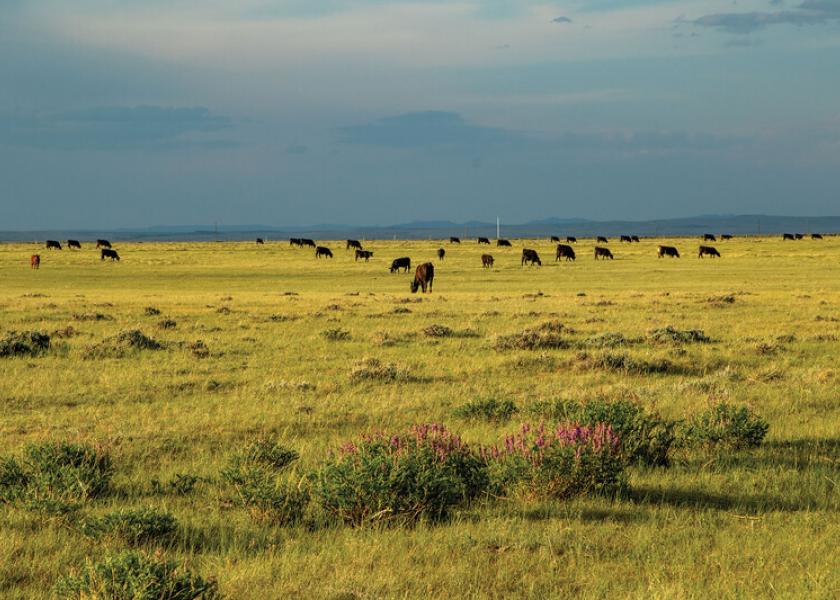
In recent weeks I discussed the impacts of drought and climate disturbances on cattle numbers, cow fertility, and lifetime productivity of calves. This week I am covering some of the ways we can improve the resilience of our production systems to drought and other climate disturbances.
Matching Environment and Cow Biological Type
Research from the USDA ARS Southern Plains Experimental Range in Harper County, Okla., from the late 1950s and 1960s indicated that the economically ideal stocking rate was 0.07 animal unit equivalents per acre. For the 1,000-pound cows common at the time this was 14.5 acres per cow. Since then the cow mature bodyweight has increased by 7 pounds per year, with current cow mature weights of 1,350 pounds. Where cows are still stocked at 14.5 acres per cow, the actual stocking rate has been increased by 25% to 0.086 animal units per acre. While cow size has increased by 350 pounds over the last 60 years, calf weaning weights have only increased by 66 pounds. With increasing resources (precipitation, fertilizer, feed, etc.) the potential for a ranch to maintain a larger cow with a higher level of milk production increases. As cow mature weight and level of milk increases costs, level of management, and risk also increase.
Flexible Stocking
Flexible stocking is not a new concept; it is common practice by many ranches in harsh environments in the western U.S., but many producers have lost sight of this system as we become more specialized in our production. If we stock the ranch with the optimal number of cows for drought years, additional forage resources could potentially be used for an alternative enterprise during years of plenty. These alternative enterprises could be a stocker operation, custom grazing for other producers, or hay production. In drought years, we can cut back on the alternative enterprise and use the excess acres for maintaining the cowherd. This would make it possible for the ranch to keep from purchasing large quantities of hay at a high price or increased culling of the cowherd at a low price.
Questions about this Article?:
Copyright © 2021-2026. All rights reserved
This website stores cookies on your computer. These cookies are used to collect information about how you interact with our website and allow us to remember you. We use this information in order to improve and customize your browsing experience and for analytics and metrics about our visitors on this website. To find out more about the cookies we use, see ourPrivacy Policy.