
Follow us on
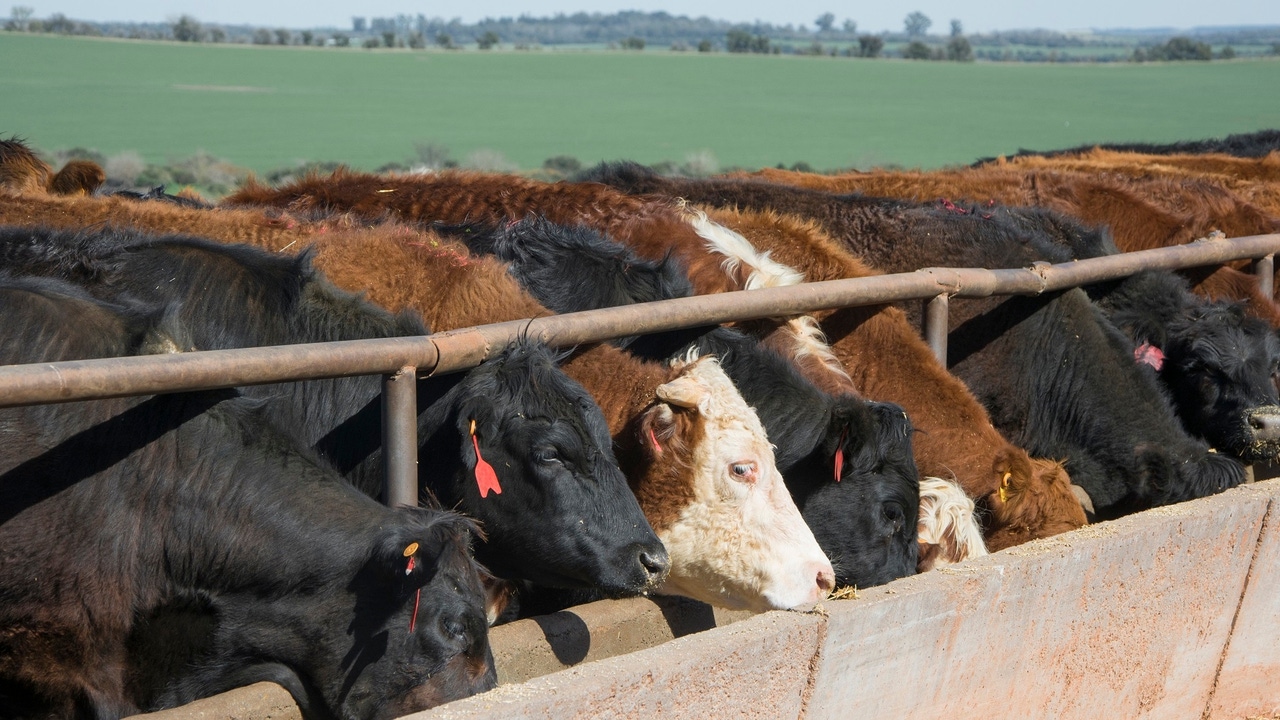
Variation in day-to-day dry matter intake of finishing beef cattle has been demonstrated to reduce overall dry matter intake and average daily gain in several production systems. However, the relationship between those factors remains unclear. A new article published in Applied Animal Science examines variation in dry matter intake of beef cattle to determine how it affects a variety of performance factors.
"This very interesting article describes evaluation of the relationships of daily individual animal variation in dry matter intake with overall feed intake, average daily gain, carcass characteristics, and feed conversion efficiency of finishing beef cattle,” says David Beede, PhD, editor in chief of Applied Animal Science. "The article illustrates and discusses the association found in the research between less variation in daily dry matter intake and more improved measures of production performance."
Daily dry matter intake data were compiled from three previously published experiments in which beef cattle were individually fed, and the day-to-day coefficient of variation and Euclidian distance were calculated for the dry matter intake of each animal. Researchers examined the correlations between the two assessment methods and production traits and efficiency indexes.
"The results indicate that day-to-day variation in dry matter intake is related to poorer production outcomes in finishing beef cattle for both assessment methods," says lead author Matthew Beck, PhD, Livestock Nutrient Management Research Unit, USDA-Agricultural Research Service, referring to the coefficient of variation and Euclidian distance assessments. However, Beck added that the outcomes that they are related to are not the same.
"It appears that day-to-day dry matter intake variability is more strongly related to energy partitioning between fat and lean tissue when assessed using the coefficient of variation method," says Beck, "whereas Euclidian distance is more strongly related to absolute reductions in empty body weight gain, independent of tissue type." Findings indicated that cattle with more improved production outcomes were associated with less day-to-day variation in dry matter intake.
Questions about this Article?:
Copyright © 2021-2025. All rights reserved
This website stores cookies on your computer. These cookies are used to collect information about how you interact with our website and allow us to remember you. We use this information in order to improve and customize your browsing experience and for analytics and metrics about our visitors on this website. To find out more about the cookies we use, see ourPrivacy Policy.