
Follow us on
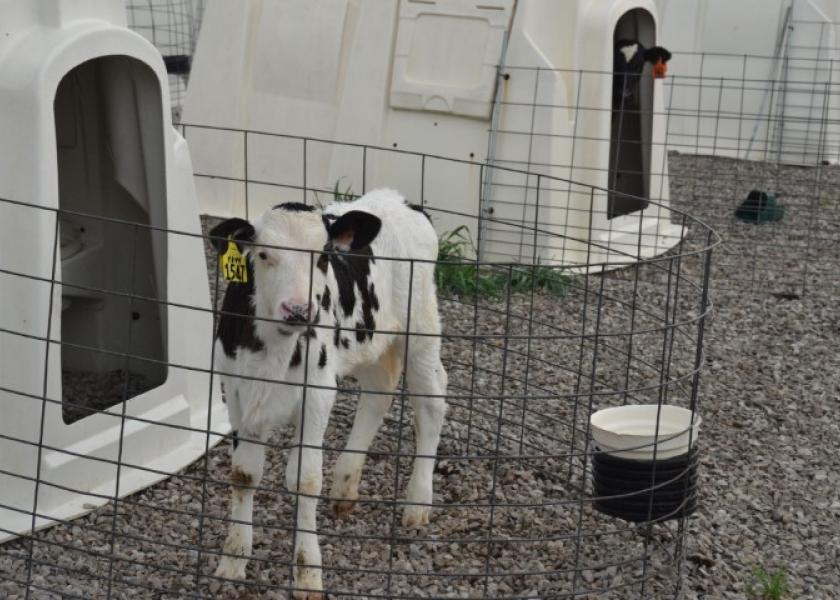
In the quest to raise healthy, productive, profitable calves comes an emerging element: genetics.
Along with the myriad factors dairy producers embrace to raise the healthiest potential offspring, there is growing evidence that calves can inherit disease resistance from their parents. Thus, traits for resistance to diseases like pneumonia and scours may become an increasingly important factor in dairy genetic selection, according to Dr. Isaac Haagen, Assistant Professor of Animal Science at the University of Minnesota.
Haagen shared his thoughts on dairy calf genetic health traits on a recent episode of The Dairy Podcast Show.He discussed data that he gathered during his graduate studies at Pennsylvania State University, which encompassed 15 organic dairy herds from across the United States, ranging in size from about 30 cows to several thousand.
Specifically, he merged the calf health data from those herds, which was gathered via a variety of herd software platforms. Then, using traditional pedigree analysis and a limited amount of genomic data, he was able to determine that, based on that data set, health traits in calves are heritable to a degree similar to more widely monitored traits like Daughter Pregnancy Rate (DPR) and Productive Life – generally, about 5-10%.
Haagen said that rate is similar to the heritability reported by Zoetis for the Calf Wellness IndexTM (CW$TM) in their Clarifide® Plus genomic test. The Clarifide Calf Wellness Index encompasses traits for respiratory disease, scours, and calf livability.
A Canadian study recently published in the Journal of Dairy Science further supports the notion that calf diseases can be controlled in part via genetic selection. In that study, records from more than 62,000 dairy calves from 1,617 Canadian herds spanning 2006-2021 were evaluated.
Questions about this Article?:
Copyright © 2021-2025. All rights reserved
This website stores cookies on your computer. These cookies are used to collect information about how you interact with our website and allow us to remember you. We use this information in order to improve and customize your browsing experience and for analytics and metrics about our visitors on this website. To find out more about the cookies we use, see ourPrivacy Policy.