
Follow us on
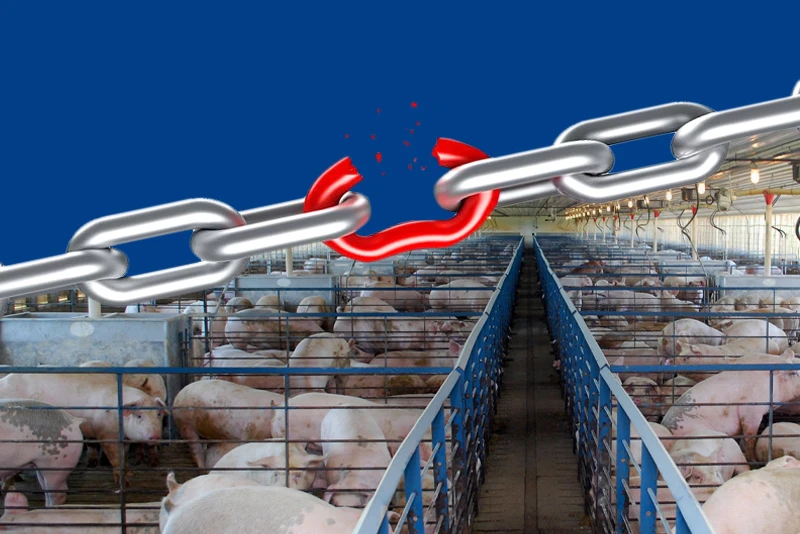
The U.S. swine industry relies on a multi-site system where pigs are moved between separate farms for different growth phases. Although efficient, this constant movement of pigs, people and equipment creates significant pathways for disease transmission.
“While sow farms often follow strict biosecurity protocols, there is limited information on how these practices are implemented and their impact on pathogen introduction in growing pig populations,” Mariah Negri Musskopf, DVM, said at the American Association of Swine Veterinarians Annual Meeting in Las Vegas.
Wean-to-finish sites play a critical role in disease dynamics but are less frequently studied. Musskopf and a team of researchers at Iowa State University set out to identify bioexclusion practices associated with porcine reproductive and respiratory syndrome virus (PRRSV) outbreaks in U.S. wean-to-finish sites.
A prospective observational study was conducted on 95 wean-to-harvest sites managed by eight companies across six states, including 33 nursery, 17 finisher and 45 wean-to-finish sites. All flows were either PRRSV-negative or PRRSV-positive stable vac¬cinated with modified-live vaccine at placement, Musskopf explains. Sites completed a detailed biosecurity survey covering 17 categories, including local swine site density. Oral fluid samples were col¬lected every four weeks from placement to market, refrigerated, and submitted to the Iowa State University Veterinary Diagnostic Laboratory for analysis.
Questions about this Article?:
Copyright © 2021-2025. All rights reserved
This website stores cookies on your computer. These cookies are used to collect information about how you interact with our website and allow us to remember you. We use this information in order to improve and customize your browsing experience and for analytics and metrics about our visitors on this website. To find out more about the cookies we use, see ourPrivacy Policy.