
Follow us on
“It is officially winter in Missouri, and our cattle herds in southwest Missouri and beyond are feeling it,” said Chloe Collins, University of Missouri Extension dairy specialist. “Whether you’re a pasture-based dairy producer or running cow-calf pairs, knowing what to expect from prolonged extreme cold and knowing how to mitigate cold stress in your herd can help you navigate this weather with more confidence.”
Direct impact from cold
Collins says both beef and dairy cattle experience the same effects from cold weather:
• Frostbite damage. Any wet or damp extremity is in danger of frostbite. Ears, tails and feet are the most at risk, and newborn calves are the most susceptible. Frostbite will start to occur at 20 degrees Fahrenheit without wind chill.
• Increased metabolic rate. During extreme cold, we can expect cattle to elevate their metabolic rate, which then increases their heat production, Collins said. That helps to raise the body temperature but will also increase appetite and feed intake.
• Reduced movement. Cattle may become harder to move during extreme cold. It is a side effect of their natural survival instinct to stay in what they’ve deemed their “protective area,” she said. They are also determined to avoid wind and areas with poor footing. If you are moving cattle, use proper handling techniques and avoid moving them too fast on slick ground.
“Another important skill a farmer needs to have during times of extreme cold is the ability to recognize cold stress in their cattle,” Collins said. Some symptoms of cold stress:
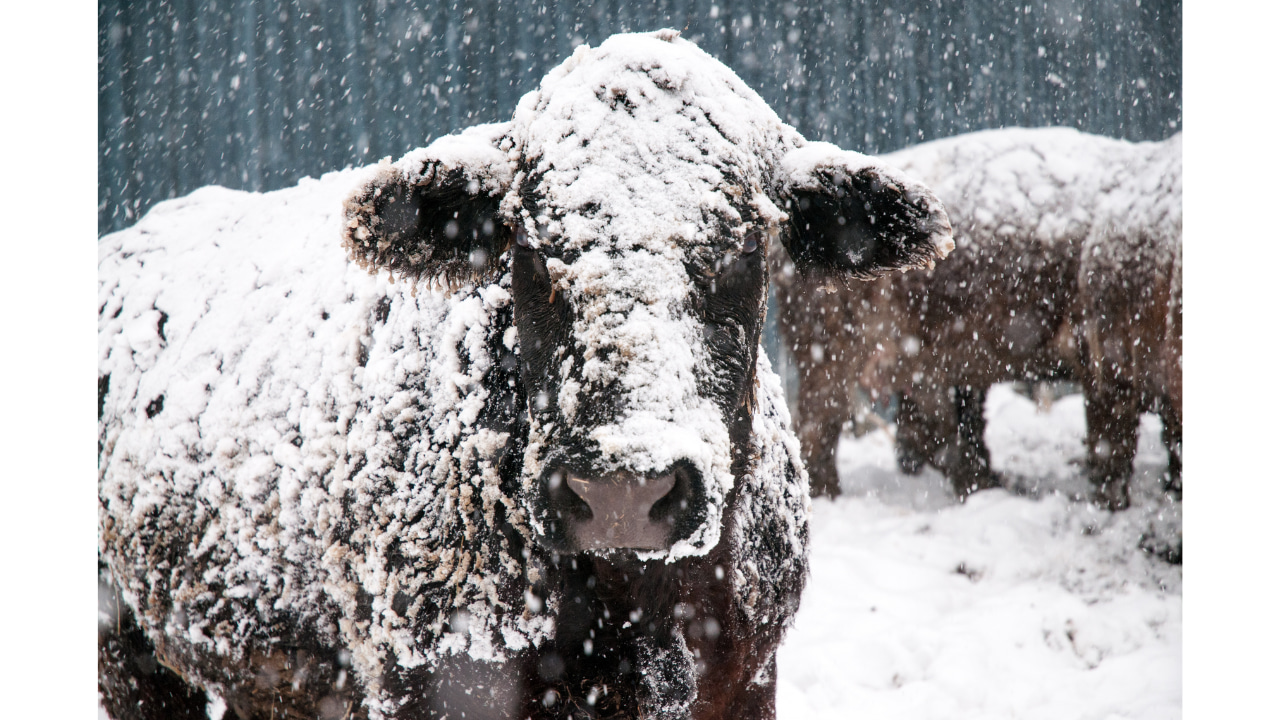
• Lack of snow covering their backs. Cattle with no snow on their backs, when it is currently snowing, is a definite sign of cold stress. Their coats are designed to keep heat in, so seeing snow build up on the animal means that the heavy winter coat is doing its job.
Questions about this Article?:
Copyright © 2021-2025. All rights reserved
This website stores cookies on your computer. These cookies are used to collect information about how you interact with our website and allow us to remember you. We use this information in order to improve and customize your browsing experience and for analytics and metrics about our visitors on this website. To find out more about the cookies we use, see ourPrivacy Policy.