
EN
Follow us on
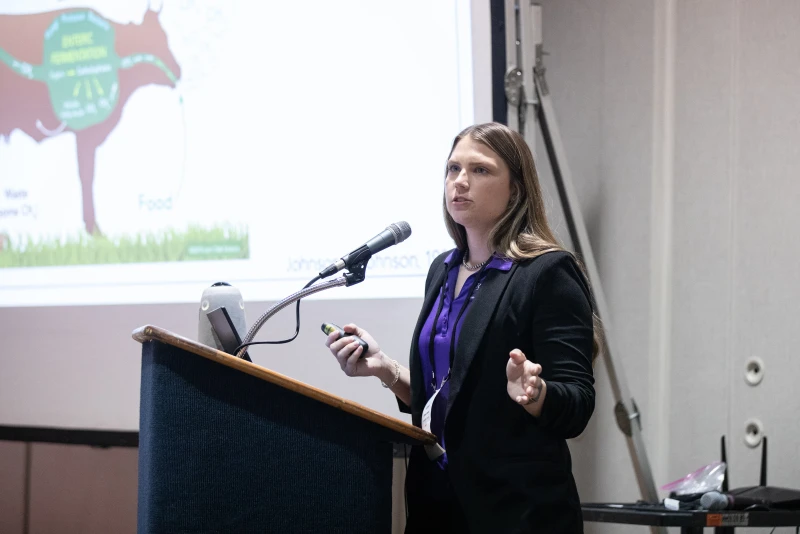
Beef producers know methane isn’t just a talking point in the headlines. It’s a natural byproduct of cattle turning grass into high-quality beef. Through the process of enteric fermentation, rumen microbes break down forage and, in the process, produce methane.
Elizabeth Dressler, Ph.D., current American Simmental Association Geneticist and former doctoral student at Kansas State University, has performed a genetic analysis of gas fluxes and metabolic heat production in grazing beef cattle. While methane is far less abundant than carbon dioxide, Dressler says, it’s a powerful greenhouse gas, and livestock account for about a quarter of methane emissions in the U.S.
Beyond environmental concerns, methane also represents an energy loss. Anywhere from 2% to 12% of the feed energy a cow consumes is lost to methane instead of going toward growth, lactation or reproduction.
For cow-calf producers, this matters. Grazing cows contribute the largest share of methane emissions in the beef supply chain. They spend the most time in this stage and eat forage-heavy diets. Tackling methane here could make the biggest difference industry-wide.
With Pressure Comes Opportunity
Pressure to reduce emissions is mounting, both in the U.S. and globally. The U.S. has pledged to cut methane emissions by 30% between 2020 and 2030. The National Cattlemen’s Beef Association has set a goal of climate neutrality by 2040. Major retailers and processors have added their own commitments.
Producers may rightfully ask: How can we realistically meet these expectations while still keeping cattle productive and ranches profitable? Feed additives, dietary adjustments and management tweaks have shown promise — but most of those strategies are easier to implement in feedlots than on pasture.
For grazing cattle, there are fewer tools in the toolbox.
That’s where genetics comes in. Selecting cattle that naturally produce less methane offers a long-term, cumulative solution. Once those
Questions about this Article?:
Copyright © 2021-2026. All rights reserved
This website stores cookies on your computer. These cookies are used to collect information about how you interact with our website and allow us to remember you. We use this information in order to improve and customize your browsing experience and for analytics and metrics about our visitors on this website. To find out more about the cookies we use, see ourPrivacy Policy.