
EN
Follow us on
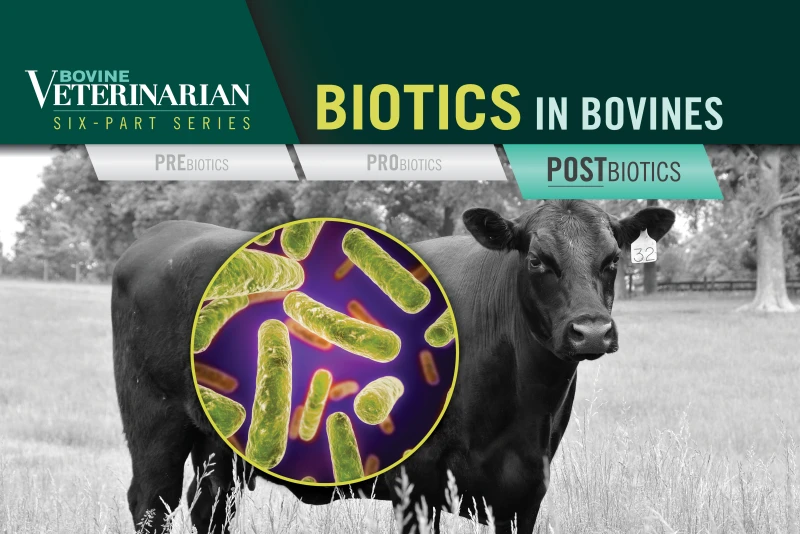
Beef production involves dramatic changes in environment, nutrition and social structure, creating repeated stress points that challenge both the rumen and the immune system. Calves face the shock of weaning and comingling, and feedlot cattle undergo abrupt dietary transitions and frequent handling.
Postbiotics, beneficial microbial products, provide a non-living, heat-stable option that can help buffer these disruptions by influencing rumen stability and immune activity. Because the microbial metabolites are delivered directly, rather than relying on live microbe survival, postbiotics can be easier to implement in beef production settings where feed delivery, pen competition and weather conditions can vary widely.
This is the sixth and final installment of the Biotics in Bovines series, where we have explored the role and application of prebiotics, probiotics and postbiotics in dairy and beef cattle nutrition. Each installment has examined a different facet of microbiome-focused nutrition from how these products work to what recent research says about their effectiveness and on-farm value. The goal is to help veterinarians and producers make informed, evidence-based decisions about integrating biotic feed technologies into herd health and performance programs.
For applications in beef, yeast fermentation products have been most commonly explored. These products are largely derived from Saccharomyces cerevisiae, containing inanimate microorganisms and/or their components. Additionally, lactic acid bacteria fermentation products may hold postbiotic promise for beef cattle.
The incorporation of these compounds may support enhanced gut barrier integrity, immune regulation, and microbial adaptation to dietary changes, especially those related to fiber digestion. In turn, these effects can help improve rumen fermentation, feed efficiency and animal performance.
Evidence in Beef Systems
In beef heifers fed high grain rations, supplementation with a yeast fermentation product resulted in improved rumen fermentation profiles. This was evidenced by increased organic matter and fiber digestibility, along with enhanced rumen buffering. This has also been seen in calves where a starter containing yeast postbiotics promoted microbial stability while mitigating subacute ruminal acidosis.
Questions about this Article?:
Copyright © 2021-2026. All rights reserved
This website stores cookies on your computer. These cookies are used to collect information about how you interact with our website and allow us to remember you. We use this information in order to improve and customize your browsing experience and for analytics and metrics about our visitors on this website. To find out more about the cookies we use, see ourPrivacy Policy.