
EN
Follow us on
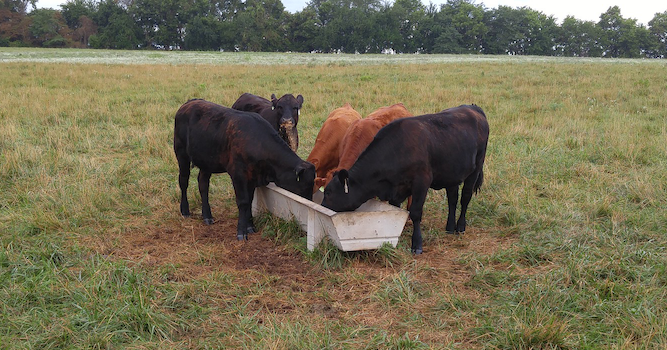
ince 2010, the U.S. Department of Agriculture has reported that the U.S. beef cattle herd has declined 12%, from 31.7 million in 2010 to 27.9 million in 2025, though producers are still able to meet beef demands through efficient cattle.
But a Kansas State University researcher suggests that producers need to take a closer look at the management of their cattle, as they progressively get larger in the next generation.
A.J. Tarpoff, an associate professor and beef veterinarian with K-State Extension, suggests that producers need to take a deeper look at how cattle are managed while in transportation and in finishing facilities, considering that they are bigger and more efficient than ever before.
“As an industry we are using less feed, less water, and less time to be able to get these animals on a per-pound-of-beef basis,” Tarpoff said. “We’re doing better than we ever have before.”
He suggests that even though the individual welfare of the animals themselves is not the major concern, there are concerns in the facilities and management when transporting and finishing these cattle.
“From our beef quality audits, we have seen an increase in bruising issues on the carcass,” Tarpoff said. “We are seeing a lot of bruising on our middle meats, the ribeye, the strips and the sirloin. These three major cuts are seeing a majority of these bigger bruises and are having to get trimmed off at the processing plant.”
The cuts that are trimmed cannot be processed into a finished product, and the beef that remains after the trimming tends to be downgraded.
Questions about this Article?:
Copyright © 2021-2026. All rights reserved
This website stores cookies on your computer. These cookies are used to collect information about how you interact with our website and allow us to remember you. We use this information in order to improve and customize your browsing experience and for analytics and metrics about our visitors on this website. To find out more about the cookies we use, see ourPrivacy Policy.